NDK, Administrative building, 9th Floor, 1463 Sofia, Bulgaria


FIFA WORLD CUP 2026: How Football is Becoming the Ultimate Marketing Asset for Alcohol Brands
- On 25/06/2026
- advertising, alcohol industry, belonging, brand communication, Brand Strategy, Budweiser, Casamigos, consumer attention, consumer behavior, Diageo, Don Julio, emotional marketing, emotions, experiences, fan culture, FIFA, FIFA World Cup 2026, football marketing, global brands, global sport, Johnnie Walker, marketing campaigns, marketing trends, media attention, sponsorship, sporting events, sports business, sports marketing, sports sponsorship, World Cup 2026, глобални брандове, емоционален маркетинг, реклама
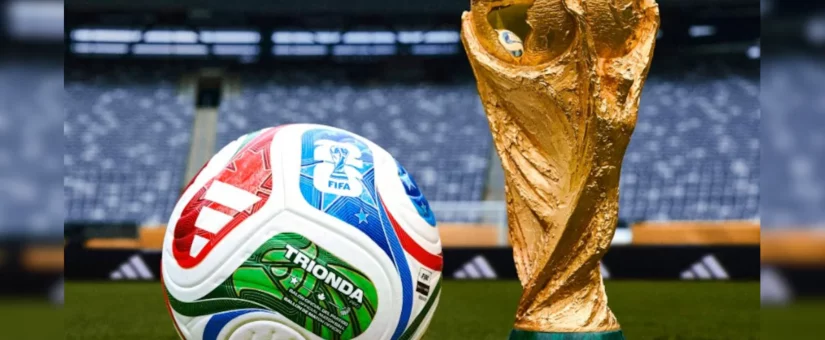
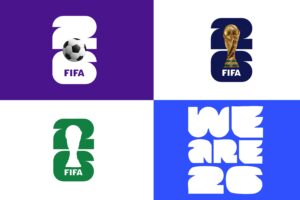 On the pitch, the FIFA World Cup is a battle for the trophy. Off the pitch, it is a battle for attention.
While national teams compete for football’s most prestigious title, dozens of global brands are competing for something equally valuable – a place in the minds of billions of consumers.
But the World Cup is far more than a sporting event and a marketing platform. It is one of the few experiences that still brings together people of different generations, countries and cultures around shared emotions and values: competitive spirit, fair play, respect for the opponent, and the ability to accept both victory and defeat with dignity.
This year’s tournament is the biggest in history. The expanded format of 48 teams and 104 matches turns the competition into a month-long media marathon that dominates news cycles, social media feeds and everyday conversations. Few events can unite such diverse audiences around the same experience. Even fewer can do so on a truly global scale.
That is precisely why the World Cup is so valuable to advertisers.
According to projections, FIFA’s revenues from the 2026 World Cup cycle could reach nearly $13 billion – a record in the organisation’s history. Behind these figures lie broadcasting rights, sponsorships and commercial partnerships, but the most valuable asset remains attention. In a world where audiences are fragmented across countless platforms and exposed to thousands of messages every day, the World Cup still offers something rare: billions of people focused on the same event at the same time.
 The World Cup Arrives at the Perfect Time for the Alcohol Industry
This comes at a time when alcohol companies are facing significant challenges.
Younger consumers are drinking less than previous generations. Non-alcoholic alternatives are gaining popularity. More people are embracing moderation, and some are choosing to abstain from alcohol altogether. At the same time, producers are searching for new ways to maintain meaningful connections with consumers in an environment where traditional advertising is finding it increasingly difficult to capture attention.
Against this backdrop, the World Cup offers something the industry can hardly create on its own – a natural occasion for consumption.
People rarely watch matches alone. They gather in bars, restaurants, fan zones or at home with friends. They order drinks, celebrate goals, debate controversial decisions and experience the tournament together. It is precisely in these moments that brands create their greatest value.
The true power of the tournament lies not only in its audience, but in the way that audience consumes content. Unlike traditional television advertising, the World Cup creates synchronised behaviour – people watch in real time, react emotionally and share the experience with others.
This makes the tournament a natural growth driver for categories such as beer and spirits. Consumption is not stimulated through persuasion, but through context. Bars, fan zones and home viewing parties become environments for immediate consumption, where the very format of the event increases the likelihood of purchase.
When Beer and Football Go Hand in Hand
The biggest winner in this environment has traditionally been AB InBev.
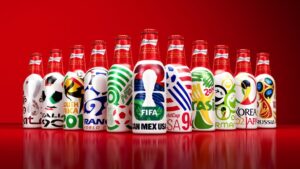
As FIFA’s official beer partner, the company has been associated with the World Cup for decades. Budweiser has long transcended the role of sponsor and become part of the tournament’s visual identity.
It is no coincidence that FIFA extended its partnership with the company through 2030. It is one of the longest and most enduring collaborations in global sport.
Budweiser does not simply sell beer. The brand sells the feeling of being part of a great moment – whether you are watching the final in the stadium, in your local bar or in your living room at home.
Over the years, the brand has consistently built its communication around belonging to the football community, collective emotion and shared experiences. The product gradually moves into the background, while the feeling of participating in something greater takes centre stage.
Spirits Also Want a Share of the Unforgettable Experience
In 2026, the picture looks somewhat different.
Diageo has made history as FIFA’s first-ever official partner in the spirits category. This demonstrates just how valuable the tournament has become for premium alcohol brands and how strongly they want to be associated with one of the most watched events in the world.
Brands such as Johnnie Walker, Don Julio and Casamigos are not positioning themselves around the game itself. Their focus lies on the moments after the final whistle – the celebrations, gatherings with friends and social rituals that football creates.
For these brands, the most important question is not who wins the match. What matters more is how people celebrate the victory.
This is precisely why major alcohol companies are increasingly telling stories about people rather than their products. The best World Cup campaigns show not what is in the glass, but what happens around it.
From Product to Story: The New Language of Alcohol Brands
Budweiser’s campaign, The World Is Yours to Take, created by Wieden+Kennedy, uses football stars such as Lionel Messi and Neymar to transform the sport into a metaphor for ambition, belonging and opportunity. The product almost disappears from the frame, while emotion and the journey towards success, experienced collectively by fans, take centre stage.
In its more recent platform, Let It Pour, the brand builds on this idea by showing how the emotions generated by the match spill beyond the stadium and into bars, homes and public spaces. The message is clear: consumption is no longer an individual act, but a collective reaction to a shared experience.
Diageo follows a similar approach through Don Julio. Its campaign, Made to Be Raised, shifts the focus to the post-match moment – not the game itself, but the way people celebrate afterwards. The value lies not only in the event, but in the emotional imprint it leaves behind.
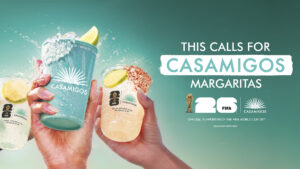
Casamigos adopts a comparable strategy in This Calls for Casamigos. Here, the product becomes part of a social ritual. The brand is not selling a drink; it is selling a particular way of spending time with friends during major sporting occasions.
These campaigns clearly illustrate one of the most important shifts in modern marketing: people are increasingly buying products not because of the products themselves, but because of the emotions, identities and sense of belonging they represent.
 The Biggest Victory Happens Off the Pitch
Today, the most valuable asset for any brand is not advertising space, but the ability to become part of the moments people remember.
That is exactly what the FIFA World Cup offers – not simply an audience of billions of viewers, but shared emotions on a global scale.
Football continues to bring people together around something increasingly valuable: a positive experience that transcends borders, languages and differences. It reminds us that winning matters, but so does accepting defeat with dignity; that rivalry does not exclude respect; and that fair play remains a value even in the fiercest competition.
This is why the World Cup remains so attractive to both fans and brands alike – because it unites people around emotions and values that endure long after the final whistle.