NDK, Administrative building, 9th Floor, 1463 Sofia, Bulgaria



Easter Marketing: From Wonder to Celebration
- On 07/04/2026
- advertising campaigns, brand communication, consumer behavior, creative advertising, Digital-marketing, easter campaigns, easter marketing, marketing strategy, marketing trends, seasonal marketing, дигитален маркетинг, маркетинг стратегия, маркетинг тенденции, сезонен маркетинг
Easter is a celebration of wonder — of rebirth, light, and hope. For centuries, it has carried a deep cultural significance tied to family, tradition, and new beginnings. In recent decades, however, Easter has also become one of the most inspiring moments in the marketing calendar. Brands have come to recognize that this holiday uniquely blends emotion, tradition, and consumer behavior.
The symbols of Easter — eggs, the Easter bunny, and spring — have evolved into a universal language of advertising. These images are not accidental: the egg represents life and potential, while the rabbit has historically been associated with fertility and renewal, making it a natural carrier of festive messaging. This cultural depth allows brands to communicate not just products, but also a sense of belonging and tradition.
Since the early 20th century, companies have leveraged the holiday for seasonal campaigns, and the rise of television in the 1950s and 1960s established Easter as a strategically important commercial period. Iconic brands such as Cadbury, Mars, and Nestlé have built long-term associations between Easter and chocolate products through campaigns that do more than drive sales — they create habits and rituals.
In 2026, however, the rules are changing. Restrictions on advertising sugary products in the UK are redirecting budgets from television to digital channels, outdoor advertising, and more holistic brand communication. The result is a more creative and focused form of marketing, where the significance of the holiday remains strong, while the approach to audiences becomes more precise and adaptive.
Cadbury — “Better the Hide, Better the Hunt” (2026)
Cadbury brings attention back to one of the most beloved Easter traditions — the hunt for hidden eggs. Instead of a standard advertisement, the brand creates print assets that can be cut out and turned into objects for hiding eggs. In this way, the ad itself becomes a tool for play.
The campaign leverages print media, social media marketing, and experiential marketing to create real interaction with consumers. The core insight is that the better the egg is hidden, the more exciting the discovery becomes. Cadbury thus delivers a campaign that helps build a festive tradition.
Tesco x Cadbury — Easter Giveaway Campaign (2026)
Tesco and Cadbury launched a campaign distributing over 1 million free Cadbury Mini Eggs. The activity is delivered through the Clubcard app, enabling personalized offers for customers. The campaign combines the retailer’s loyalty strategy with efforts to drive in-store visits. It also encourages impulse purchases and increases average basket value. In this way, the promotion itself becomes an engagement mechanism.

Snapchat — AR Easter Egg Hunt (2026)
Agency: Snapchat Creative Studio
Snapchat created a global AR game featuring virtual Easter eggs. Users discover eggs via Snap Map and earn points. The campaign uses gamification and augmented reality to increase engagement. It transforms Easter into a digital adventure. Easter is no longer only a physical ritual — it extends into the digital space.

LEGO — Easter Store Experience (2026)
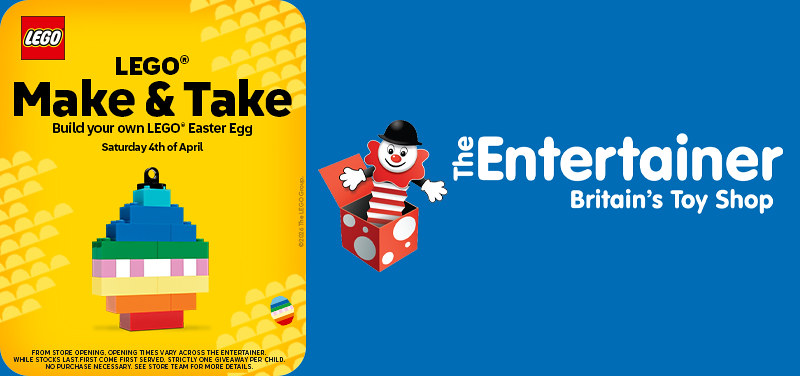
LEGO organizes Easter Egg Hunt events in its stores. The campaign includes workshops, games, and family activities. Children can build Easter-themed models and win rewards. This turns retail spaces into environments for creativity and play, rather than just points of purchase. LEGO strengthens its identity through participation rather than communication.
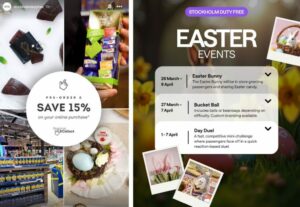
Stockholm Duty Free — Easter Airport Experience
Stockholm Duty Free creates interactive games at the airport. Travelers participate in activities and meet the Easter Bunny. The campaign turns waiting time into an experience and encourages social sharing. LEGO strengthens its identity through participation rather than communication.
M&M’s — Limited Edition Easter (2026)
Agency: BBDO
M&M’s Easter 2026 campaign focuses on a limited seasonal edition that combines festive design with elements of surprise and collectability. The products feature spring-inspired colors and themed packaging designed to stand out in retail environments and drive impulse purchases. The strategy also includes collaborations with popular brands to expand reach and strengthen audience engagement. The campaign is supported by digital content and social activations that encourage sharing and interaction.
McDonald’s — Minimal Easter Visual (2017)
Agency: TBWA
As a natural counterpoint to today’s interactive and digital Easter campaigns in 2026, the value of a minimalist approach remains relevant. Back in 2017, McDonald’s, in collaboration with TBWA, demonstrated how a single strong visual idea can convey meaning without words — through a simple transformation of a familiar element into a symbol of the holiday. The campaign shows that a clear idea and a recognizable symbol often have greater impact than complex mechanics. In this sense, it remains relevant today as a reminder that every modern idea starts with a clear and recognizable thought.

The Miracle of Easter and the Miracle of Marketing
Easter remains one of the most distinctive holidays, combining tradition, emotion, and cultural significance — and it is precisely this that makes it so valuable for brands.
Recent campaigns clearly illustrate the transformation of marketing: from product to experience, from communication to participation, and from one-off campaigns to the creation of rituals. Today, successful brands do not merely appear within the holiday — they become a meaningful part of it.
Modern Easter marketing integrates social media, retail ecosystems, loyalty programs, AR technologies, and physical spaces into a unified, multi-layered consumer environment. This creates a seamless experience that begins online, continues in-store, and naturally extends into everyday life.
At the same time, restrictions, regulations, and an increasingly saturated product environment do not limit creativity — they sharpen it. Brands are increasingly focusing on meaningful ideas, clear insights, and cultural relevance.