NDK, Administrative building, 9th Floor, 1463 Sofia, Bulgaria



Children Online: How Europe Is Rethinking Access and Protection
- On 14/09/2026
- age restrictions, AI in education, child protection, child safety, children online, digital regulation, Digital-marketing, European Union, generative AI, influencer marketing, smartphones in schools, social media age limits, Social-Media, targeted advertising, дигитален маркетинг, инфлуенсър маркетинг
 As the new school year begins, attention is once again turning to how children use digital technologies. Just a year after AI in education was one of the leading topics, the focus in 2026 is increasingly shifting towards a broader question: where should the boundaries of digital access for children be drawn — when it comes to social media, smartphones and generative AI?
Across Europe, different approaches are already being considered, ranging from phased access based on age to specific restrictions on social platforms and smartphone use in schools. Some countries have already introduced concrete measures, while others are preparing national rules or calling for a coordinated European approach. European countries are gradually converging around the need for clearer rules governing children’s digital access, although approaches to implementation still vary.
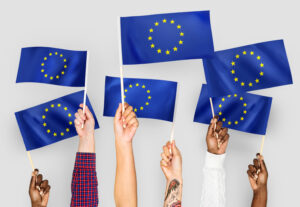 Europe Debates Age Restrictions for Social Media
At European level, there is still no single binding rule banning social media for all children below a specific age. Instead, different options for a harmonised approach are being considered, including a model under which access would gradually expand as children grow older.
In July 2026, European Commission President Ursula von der Leyen said that a phased model was being considered, under which younger children would have limited and controlled access, with greater access introduced as they get older. This approach differs from a blanket ban applying to all minors below the same age and instead focuses on a gradual introduction to the digital environment.
 Under 15: One of the Proposed Thresholds
On 8 September 2026, French President Emmanuel Macron called on the European Commission to support an EU-wide ban on social media for children under 15. The proposal came after France’s Constitutional Council blocked a national law that would have banned social media for this age group and was due to take effect in September.
According to Reuters, the Constitutional Council’s decision was linked to questions concerning the proportionality of the measure and fundamental rights.
This means that, at present, there is no European ban on social media for children under 15. Rather, the 15-year threshold is part of a specific French proposal for EU-wide legislation. The figure has therefore emerged as one of the options being discussed in Europe, alongside other models for age verification and age-appropriate access.
 Under 16: The European Parliament’s Position
The European Parliament has already expressed its own position on the issue of a minimum digital age. In a report adopted on 26 November 2025, MEPs called for a digital minimum age of 16 for access to social media, video-sharing platforms and AI companions, while allowing 13–16-year-olds to access these services with parental consent.
Parliament also called for tighter restrictions on features that encourage excessive use, including infinite scrolling, autoplay, reward mechanisms and other systems designed to keep users engaged.
The position also highlights targeted advertising, influencer marketing, addictive design and other practices that may exploit the vulnerabilities of minors. It is important to stress, however, that this is a non-binding position of the European Parliament and does not itself introduce a mandatory EU-wide age limit.
 Greece Prepares Restrictions for Children Under 15
Greece is among the EU member states that have already announced a concrete timetable for a national measure. According to the Greek government, access to social media for children under 15 will be banned from 1 January 2027.
Prime Minister Kyriakos Mitsotakis has said that the restriction will require European cooperation because major platforms are regulated within the EU’s Digital Services framework. Platforms are expected to use age-verification mechanisms, with enforcement linked to the requirements of the Digital Services Act.
The Greek model illustrates how national governments are moving from broad calls for stronger child protection towards concrete age thresholds and greater responsibilities for platforms themselves.
 Norway Restricts Generative AI in Primary Education
Alongside the debate over social media, Norway is taking a more cautious approach to the use of generative AI in schools.
On 19 June 2026, the Norwegian government and Ministry of Education announced a new national recommendation stating that, from the beginning of the 2026/2027 school year, pupils in grades 1–7 should generally not use generative AI in their schoolwork.
For students in grades 8–10, the approach allows for careful and gradual experimentation with the technology, with its use dependent on teachers’ preparedness and training.
The government has justified the approach by stressing the importance of children first developing core skills in reading, writing and mathematics. It has also warned that uncritical use of generative AI could cause students to bypass important stages of the learning process.
The measure is not an absolute ban and allows AI tools to be used in certain educational contexts and where specific individual needs justify their use.

Smartphones and Their Use in Schools
The debate around child safety is not limited to social media and AI. An increasing number of European countries are also taking measures to regulate smartphone use in schools, with the aim of reducing distraction, excessive screen time and loss of concentration.
This is particularly relevant at the beginning of the school year, when the question is no longer simply what content children see online, but also when and how much they use their devices.
Schools are increasingly becoming environments where governments are seeking to establish a clearer boundary between digital technologies and the learning process. Child protection is therefore being considered more broadly — not only in terms of access to platforms, but also in terms of everyday digital habits.
 France Introduces Phone-Free Schools
From the beginning of the 2026/2027 school year, France is expanding its restrictions on the use of mobile phones and other connected devices across the entire school period, from primary education through secondary school.
France’s Ministry of National Education cites the need to limit excessive exposure to screens and protect students’ attention, concentration and ability to learn.
The restrictions apply both within schools and during educational activities outside school premises that are connected to the learning process. Schools can determine how phones are stored, including through lockers, boxes or specially designed lockable pouches.
France is therefore focusing not only on the content children access online, but also on the constant availability of smartphones throughout the school day.

Italy Extends Smartphone Restrictions to Secondary School
Italy has also expanded restrictions on smartphone use to older students.
Under a ministerial order issued on 16 June 2025, the Ministry of Education introduced, from the 2025/2026 school year, a ban on the use of mobile phones during educational activities for students in the second cycle of secondary education (grades 11 and 12).
The measure builds on restrictions previously introduced for the first cycle of education and places a strong emphasis on concentration and the quality of the learning process.
Exceptions are provided for medical, educational and other specific needs where the use of a device is justified. The Italian example shows how restrictions are gradually being extended across different age groups, making smartphone management an increasingly established part of school policy.
 What Do the New Restrictions Mean for Advertisers?
Changes to age restrictions, age verification and child protection will also affect how brands reach younger audiences.
The European Parliament has already highlighted targeted advertising, influencer marketing, personalised recommendations and addictive design as areas where additional restrictions and oversight may be needed.
For advertisers, this could mean becoming less reliant on behavioural targeting and placing greater emphasis on context, content, communities and creative formats.
Brand activations, sports and cultural initiatives, pop-up events and interactive experiences may become increasingly important as ways of giving audiences a genuine reason to engage with a brand.
For advertising agencies, this means balancing performance and data with privacy requirements, age restrictions and the quality of the overall user experience.
 A New Direction for Children Online
The 2026/2027 school year begins at a time when the discussion around children and technology is moving beyond AI in education and increasingly encompasses the entire digital experience.
Social media, smartphones, generative AI, algorithms, age verification and the way digital services are designed for younger users are now all part of the conversation.
Europe still has no single model. The broader direction, however, is towards clearer age-based rules for digital access and a shared responsibility for protecting children.
For businesses and the advertising industry, this means finding a new balance between data, performance and creativity. Content, communities, influencers, activations and experiences that can build meaningful connections with audiences are likely to become increasingly important.
Young people will not disappear from the digital ecosystem, but the way brands communicate with them is likely to become more responsible and less dependent on personal data.
Restrictions may therefore become more than a regulatory challenge. They could also encourage more meaningful ideas and higher-quality digital experiences.
The industry’s responsibility does not end with complying with the rules. It also extends to the content it creates, the behaviour it encourages and the patterns of digital consumption it helps shape among younger audiences.