NDK, Administrative building, 9th Floor, 1463 Sofia, Bulgaria



Valentine’s Day for Every Relationship Status
- On 13/02/2026
- advertising campaigns, anti-Valentine's campaigns, brand storytelling, consumer behavior, cultural insights, experiential marketing, humor in advertising, inclusivity, influencer marketing, lifestyle brands, limited editions, love stories, luxury brands, marketing trends, modern romance, promotions, self-care, single audience, Social-Media, Valentine's Day, дигитален маркетинг, реклама
Valentine’s Day has long ceased to be a holiday “just for couples.” Across social media, advertising, and consumer behavior, a clear shift is evident: love is increasingly communicated as an experience, a choice, and an attitude—toward others, toward the community, and toward ourselves. Campaigns created around this occasion reflect this evolving reality with ever more creative and diverse storytelling.
Whether celebrating as a couple, single, or happily single, brand campaigns now make space for playful, unconventional, and sometimes even provocative messages—from limited-edition products and exclusive offers to humorous and anti-romantic concepts. From a marketing perspective, Valentine’s Day remains a true goldmine—provided the story isn’t the same old tale of roses and chocolates.
What Valentine’s Day Campaigns Tell Us
The traditional narrative of “he + she = hearts” is no longer sufficient. Today’s most successful Valentine’s campaigns celebrate different forms of love, incorporate humor and self-irony, acknowledge the single audience, and champion social causes. Social media is leveraged for playful, interactive messages, challenges, and stories that audiences can recognize themselves in and actively engage with.
Five Favorite Love-Focused Valentine’s Campaigns
1. Tiffany & Co. – Celebrating Love Stories
Tiffany & Co.’s 2026 Valentine’s campaign, Celebrating Love Stories Since 1837, features actress Adria Arjona in a short film that highlights the power of daily gestures in sustaining love. Arjona showcases pieces from the HardWear collection and the iconic Tiffany Setting engagement ring, symbolizing strength and enduring affection. The campaign continues Tiffany’s tradition of celebrating love in all its forms.
2. Cadbury Dairy Milk – “Homesick” (January 2026)
Created by VCCP as part of the long-standing There’s a Glass & a Half in Everyone platform, this 60-second film directed by Steve Rogers tells the story of a sister in Kuala Lumpur receiving a chocolate bar with a missing piece—eaten by her younger brother before sending—transforming it into a symbol of affection from afar. The campaign reframes Valentine’s communication, highlighting imperfect but genuine gestures between loved ones separated by distance. The hashtag #Homesick generated widespread user engagement and personal stories online.
3. Calvin Klein – “Our Calvins” (January 20, 2026)
Our Calvins marks a clear evolution from the long-running #mycalvins platform to a new message: “from my Calvin to our Calvin,” shifting focus from individual confidence to shared intimacy. Featuring actors Grace Van Patten and Jackson White from Tell Me Lies, captured in natural, homey moments by photographer/director Zora Sicher, the campaign emphasizes quiet, effortless closeness rather than overtly sexualized aesthetics. The message: true intimacy lives in everyday moments, when you can fully be yourself with someone else.
4. Oreo – “The Oreo Cows” (January 22–23, 2026)
Created by VML for the Mexican market, this campaign uses deliberately absurd but warm humor. The five-minute video features Belted Galloway cows and a farmer defending their authenticity, persuading Mexico that dunking Oreos in milk (“chopeo”) deserves a comeback. Supported by limited-edition milk bottles for influencers and co-branded products, the campaign revitalizes a cultural ritual with creative audacity. The tagline “Where there’s an Oreo, there’s milk” reminds us that even simple rituals can be rediscovered with humor.
5. Savage X Fenty – “Love So Savage” (2026)
This campaign positions confidence and self-expression at the heart of Valentine’s messaging, with founder and global icon Rihanna as its face. The visual concept combines sensual aesthetics with empowerment and modern femininity, framing the Love So Savage collection as a celebration of self-assurance rather than just romance. Early engagement metrics showed significant boosts in ad awareness, buzz, and consideration, demonstrating how messages of self-love and body acceptance resonate far beyond traditional Valentine’s marketing.
Five Creative Campaigns for Singles on Valentine’s Day
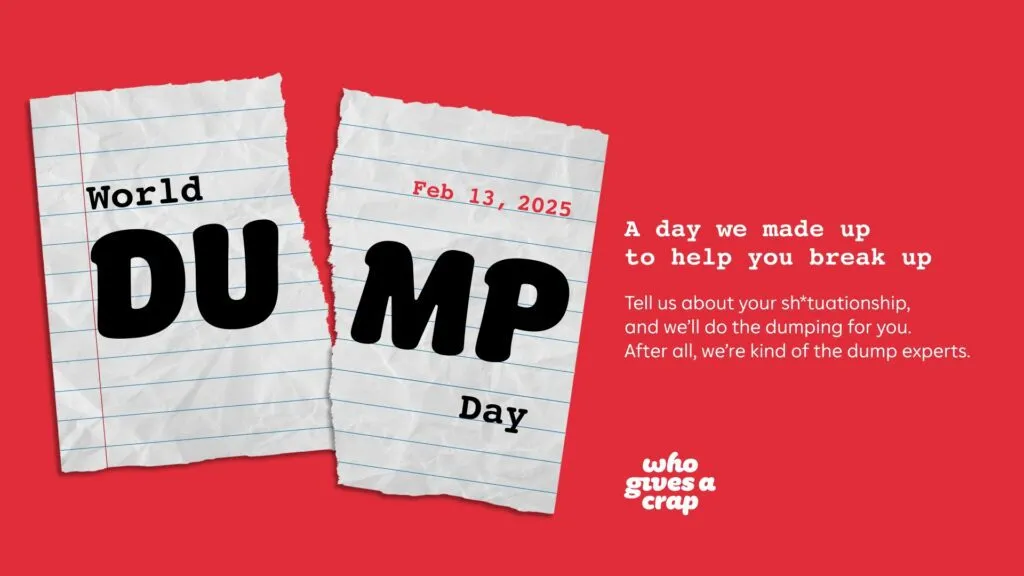
1. Who Gives A Crap – “World Dump Day” (2025)
The campaign, launched on February 13 as an anti-Valentine’s initiative, encouraged people to “break up” with relationships that no longer served them. The brand offered a personalized letter-writing service for breakups, drawing on data showing that nearly 1 in 5 people struggle to find the right words, while 25% would turn to AI for help. The message cleverly tied the core product (toilet paper) to the idea of “letting go” and emotional release, while maintaining the brand’s playful and slightly provocative tone. The campaign stood out by completely subverting the traditional romantic Valentine’s narrative, giving a voice to those who feel excluded from conventional holiday marketing, and combining humor, sustainability, and a socially conscious perspective.
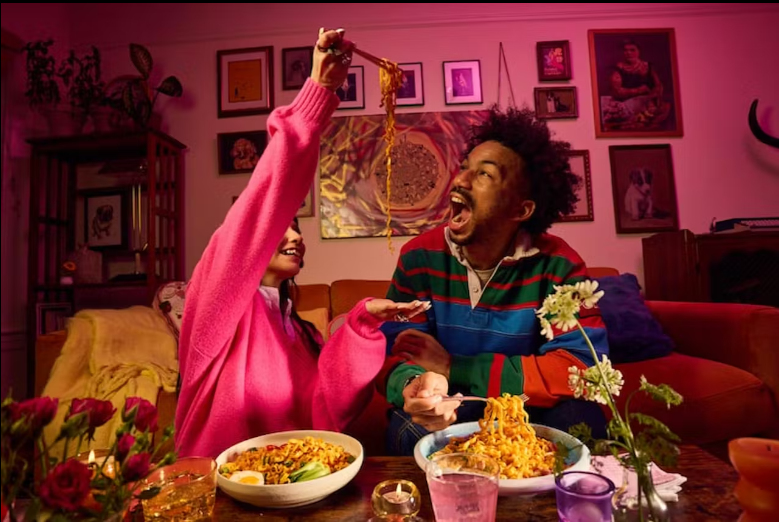
2. Maruchan – Valentine’s Day 2026 (January 15)
The campaign flips the classic romantic ad on its head with humor and wordplay, encouraging people to “send Saucy Noods to their crush” – full of cheeky double entendres rather than traditional romantic gestures. Launched around January 15, it leveraged digital channels, including TikTok Shop and dating app integrations, to spark conversation and engagement among younger audiences. The brand saw a sharp increase in ad awareness, buzz, and consideration throughout January, proving that its unconventional approach resonated with consumers and boosted visibility during the Valentine’s season. The tagline “Send Saucy Noods” playfully turns an ordinary pack of noodles into a source of fun, conversation, and social sharing.
3. Deliveroo – Third Wheel Kevin (2017)
The campaign, launched for Valentine’s Day 2017, humorously flips the stigma of being “the third wheel” into an excuse for a fun dinner with Deliveroo. It drew on relationship and holiday insights, offering a special “Third Wheel Meal Deal” – an idea that welcomed singles, friends, and couples alike, celebrating togetherness around food. The video, featuring the character “Kevin,” playfully captures the experience of being alone amidst romantic scenes, resonating with both singles and couples. The campaign garnered significant attention and media coverage, accumulating impressive online views and sparking conversations around the holiday beyond traditional romantic messaging.
4. Knorr x Tinder – Cooking as a Green Flag (2025)
The campaign was a socially-oriented Valentine’s initiative in 2025, executed by MullenLowe UK in partnership with Knorr and Tinder. It tapped into the cultural trend of the “green flag” in dating, positioning cooking as a universal positive signal for a potential relationship – a skill that 93% of Gen Z find attractive and can highlight on their Tinder profiles to increase their chances of a match.
The concept was brought to life through playful TikTok videos, recipes, and cooking tips, as well as real-life events that allowed singles to showcase their “green flag” skills in the kitchen.
5. Match.com – “Match Made in Hell” (2020)
The campaign was created by the agency Maximum Effort, Ryan Reynolds’ company. The ad employs humor and an absurd storyline in which “Satan” meets the year 2020 in a comically romantic narrative, illustrating the challenges and quirks of online dating. The campaign was distributed primarily via social media and YouTube, amassing millions of views and billions of impressions.
The message: even the chaotic and awkward moments in dating can be fun and shareable, and Match.com makes the process easy and accessible for everyone. Featuring Ryan Reynolds and a viral format, the ad became a cultural phenomenon, resonating especially strongly with younger audiences.
Love is a Choice
Love is a Choice
For the single audience, Valentine’s Day gains new dimensions: it’s no longer just for couples, but a celebration of choice—the choice to prioritize happiness and embrace what truly brings joy. Discounts, limited editions, and self-care campaigns aren’t just marketing gimmicks; they’re an expected part of the season, turning luxury products and experiences into satisfying, uncompromised choices.
Ultimately, love is a choice—not just on February 14, but every day. A choice to love your partner, your friends, your family, and yourself.
Advertising simply reflects this: sometimes with roses, sometimes with humor, sometimes with a 30% discount on something long desired. Valentine’s Day remains a powerful moment for brands, because love sells—but only when it’s authentic, inclusive, and told with a touch of magic.